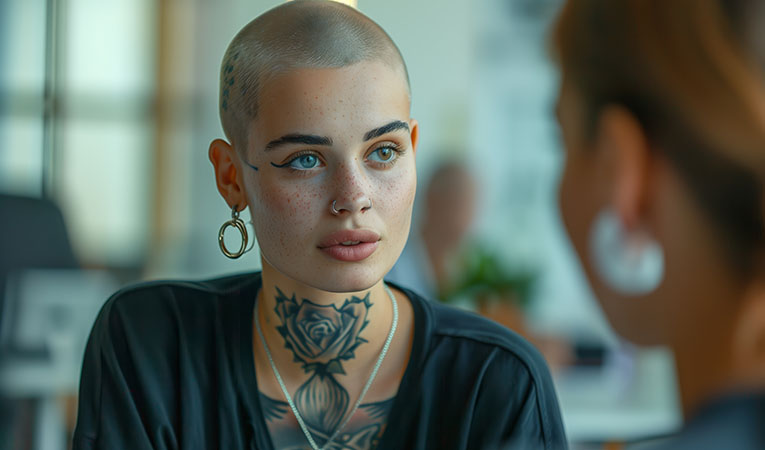
Balancing self-expression with professionalism can be challenging, especially when first impressions matter. In a legal job search, this balance becomes even more important. While some industries embrace individuality, others – particularly the legal and corporate sectors – continue to hold conservative views. The question for heavily modded job seekers is how to remain authentic without compromising their chances of landing the job. Perceptions of piercings, tattoos, and other body alterations in the workplace have evolved significantly over the past few decades, but they are not universally accepted. Opinions remain strongly influenced by industry standards, firm culture, geographic location, and broader societal norms.
Industries with conservative values – especially law firms, courts, and corporate legal departments – often expect employees to maintain a conventional appearance. For this reason, voluntary, permanent, and extreme visible alterations that cannot be concealed are generally less accepted, particularly in front-facing roles with heavy client interaction. In such settings, body modifications may be perceived as unprofessional or distracting and could potentially influence how hiring managers evaluate candidates during the hiring process. Legal employers prioritize credibility, trust, and professionalism, and visible body art can unintentionally conflict with that image.
The placement, type, depiction, and prominence of body art are also important considerations. Grossly offensive tattoos and modifications to the face, lips, ears, neck, hands, and fingers can negatively influence perceptions. Most industries – including the legal field – permit standard earlobe piercings. Remove other non-traditional piercings, including those to the ears, bridge, eyebrows, nose, cheek, or tongue, and cover tattoos until you know what the company policy allows. This approach helps ensure your appearance aligns with traditional expectations during interviews and early employment.
Displaying unconventional body modifications that conflict with a desired professional image might make your job search more challenging. A good rule to follow is to “look the part.” Make sure your presentation and style adhere to established business standards and expectations. Many companies adopt and enforce specific dress and personal appearance guidelines that prohibit visible body modifications while a person is “on duty.” Understanding these expectations early can help you navigate interviews more confidently.
Exercise discretion in self-expression when pursuing a career in the legal or corporate sector. Acceptance of physical changes that significantly alter the body usually depends on the role and its context. Consider the field you are entering and the prevailing attitudes held by those in it toward visible modifications. Changing one’s appearance is a universal practice. However, stigma and bias do exist towards non-conforming aesthetics, and first impressions matter – especially in legal careers where professionalism is central to success.
Contact Center for Advanced Legal Studies at https://paralegal.edu to learn more about our resources, accredited and ABA-approved paralegal programs, and upcoming class start dates

Director of Outreach and Career Services
Tami has an extensive and varied professional background that spans criminal justice, paralegal education, and international school marketing and communication. Her career has been guided by a focus on developing strategic partnerships that facilitate school growth and student opportunities. She holds a Bachelor of Science in Degree in Criminal Justice from Texas State University.